
Preparing your dog before a board and train program can make the transition easier to manage and help ensure the trainer has the information, records, food, medications, and handling details needed for your dog’s stay. Good preparation also gives owners a chance to understand the program and what will be expected after the dog returns home.
This guide covers the practical steps dog owners should consider before drop-off day, including health records, routine preparation, packing, behavioral history, and questions to confirm with the trainer. Requirements vary by provider and program, so always follow the instructions given by the trainer who will be caring for your dog.
The short answer: Start by confirming the program’s health and vaccination requirements, gathering records, discussing medications and behavioral history, keeping your dog’s routine reasonably consistent, and following the trainer’s packing and drop-off instructions. If the program uses crate housing and your dog is not comfortable in a crate, begin gradual crate practice as early as practical.
By following this guide, you’ll be better prepared to:
- Confirm health and vaccination requirements before your dog’s stay
- Provide accurate medical and behavioral information to the trainer
- Pack the items requested by the program without unnecessary extras
- Plan a clear drop-off and owner follow-through process
Understanding Board and Train Programs
A board and train program is an immersive training format in which a dog stays with a professional trainer for a defined period while receiving structured training. Program length, training goals, housing arrangements, equipment, and eligibility vary by provider.
Off-Leash K9 Training Colorado currently offers 1-Week and 2-Week Board & Train options with different skills and owner follow-up sessions. The 1-Week program focuses on on-leash foundational obedience, while the 2-Week program includes more advanced off-leash skills.
Board and train may appeal to owners who want a more immersive training format and structured practice around everyday distractions. Whether it is appropriate depends on the dog’s age, behavior, training history, and the owner’s goals.
The Off-Leash K9 Training Approach
Off-Leash K9 Training Colorado’s Board & Train programs include structured obedience work and owner education after the training period.
The 2-Week Board & Train includes advanced skills such as off-leash heeling, full off-leash recall, duration commands, manners, and training around distractions. The current program includes an e-collar, seven guaranteed commands, a two-hour owner session after completion, and free refreshers for life.
The 2-Week Board & Train includes off-leash heeling and full off-leash recall among its listed skills. After completion, owners receive a two-hour one-on-one session covering what the dog learned and how to handle the dog at home.
Why Preparation Matters
A new boarding and training environment can be an adjustment for some dogs. Preparation cannot guarantee how quickly a dog will settle, but giving the trainer complete medical, feeding, behavioral, and routine information can help the team plan appropriately for the dog’s stay.
Before drop-off, confirm the program’s current health, vaccination, medication, housing, and intake requirements directly with the trainer.
Essential Health and Documentation Requirements
Colorado’s PACFA regulations include recordkeeping and veterinary-care requirements for licensed boarding/training facilities. Among other requirements, facilities must keep identifying and veterinarian information for boarded or trained animals and maintain an immunization record for each boarded animal.
Owners should still confirm the specific vaccines and documentation required by their chosen program before arrival.
Vaccination Records
Confirm the program’s current vaccination requirements before your scheduled stay and provide the records the trainer requests. Colorado PACFA rules require a facility to keep an immunization record for each boarded animal, including the date the immunization was given or its expiration date.
The PACFA recordkeeping rule itself does not establish Rabies, DHPP, and Bordetella as three universal requirements for every dog entering an in-state boarding/training program. Vaccine requirements and timing should therefore be confirmed directly with the trainer and your veterinarian rather than assumed from a general checklist.
Medical Information and Medications
If your dog has a medical condition, recent injury, exercise restriction, or other health concern, discuss it with your veterinarian and trainer before the program begins. Do not assume that every provider requires an examination a specific number of weeks before training unless the provider tells you so.
Under Colorado PACFA rules, if a boarding/training facility agrees to administer prescription medication, it must be supplied in the original container issued by the veterinarian or pharmacy and administered according to the label directions. Supplements and nonprescription medications must also remain in their original containers.
Ask the trainer how much medication to provide and whether any additional documentation is required.
Behavioral History Disclosure
Provide a complete behavioral history, including known bite incidents, aggression, resource guarding, reactivity, fear responses, escape behavior, handling sensitivities, and other safety concerns. Accurate disclosure helps the trainer determine whether the selected program is appropriate and how the dog should be handled.
Not every dog is automatically suited to Board & Train. In particular, Off-Leash K9 Training Colorado notes that aggressive dogs may not be appropriate for its Board & Train program and may benefit more from working alongside the owner in lessons.
Pre-Program Routine and Preparation
Once the required records and health information are organized, focus on keeping your dog’s daily routine reasonably predictable before the stay. Avoid making unnecessary last-minute changes unless your trainer specifically asks you to adjust something.
Establishing Clear Expectations
Set clear behavioral goals before enrolling your dog. Think about the specific improvements you want to discuss with the trainer, such as better leash manners, stronger recall, more reliable basic commands, greeting manners, or better control around distractions.
At home:
- Keep meals reasonably consistent — follow your dog’s normal feeding routine unless the trainer gives you a different preparation plan.
- Avoid reinforcing unwanted behavior — be consistent about household rules for jumping, begging, door manners, and other behaviors you are already working on.
- Practice simple engagement skills — name recognition, attention, and calm responses to familiar cues can make everyday handling easier.
- Continue normal leash practice — use the approach your dog already understands rather than introducing a completely new system immediately before the program.
Avoid overhauling every part of your dog’s routine immediately before drop-off. The goal is predictable handling and accurate information, not creating an entirely new lifestyle in a few days.
Crate Training Preparation
Ask whether your dog’s program uses crate housing. Colorado PACFA rules require written owner consent before a boarded dog is housed in a crate.
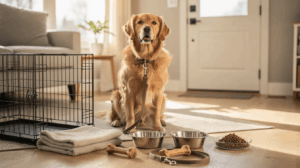
If crate housing will be part of the stay and your dog is not already comfortable in a crate, introduce it gradually rather than forcing long periods immediately. You can use meals, calm praise, and appropriately selected rewards to create a more positive association. Increase duration according to your dog’s comfort and age rather than following a rigid schedule.
The AKC’s crate-training guidance also emphasizes gradual introduction and making the crate a positive environment.
Questions to Confirm Before Drop-Off
Before drop-off, ask the trainer how the dog’s daily routine will be handled:
| Topic | What to Confirm |
| Feeding | What food to bring, portion instructions, and feeding information |
| Rest and housing | Whether crates or another housing setup will be used |
| Exercise and training | What the selected program includes |
| Training equipment | What the trainer provides and what the owner should bring |
| Communication | How and when progress updates are typically provided |
If your dog already struggles significantly when left alone, disclose that before enrollment. Do not rely on a few short practice departures to resolve serious separation-related behavior.
Strategic Packing and Drop-Off Preparation
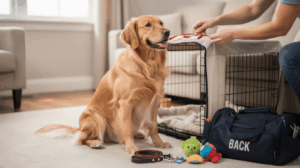
Packing requirements vary by program, so ask your trainer for the current written checklist rather than relying on a generic list.
Off-Leash K9 Training Colorado’s Board & Train programs include an e-collar, but owners should confirm what other equipment or personal items need to be brought to drop-off.
Essential Items Checklist
- Food: Bring your dog’s normal food in the amount and packaging requested by the trainer.
- Identification: Make sure your dog’s identification information and your own current contact details are accurate.
- Medications: Provide medication in the original labeled containers and follow the trainer’s intake instructions.
- Health records: Bring or submit the vaccination and veterinary documentation requested by the program.
- Care instructions: Provide accurate feeding, medication, medical, emergency-contact, and behavioral information.
- Other equipment: Bring a leash, collar, treats, or other items only as directed by the trainer’s current packing instructions.
Items to Leave at Home
Do not assume that bedding, toys, chews, harnesses, specialty collars, clothing, or other personal equipment should accompany your dog. Ask the trainer what is permitted and leave unnecessary items at home unless they are specifically requested.
Drop-Off Procedure
The exact intake process can vary, so confirm the details before program day.
- Confirm the exact drop-off time and location with your trainer before the program begins.
- Arrive with the requested records and supplies so intake can proceed smoothly.
- Give the trainer an accurate final update about food, medication, health changes, and behavior since the consultation.
- Keep the handoff straightforward rather than adding unnecessary excitement to the transition.
- Confirm the communication plan, so you know how progress updates and urgent questions will be handled.
Common Preparation Challenges and Solutions
Even with good planning, some dogs and households encounter challenges before the program begins.
Dog Resists Crate Training
If your dog resists the crate, avoid suddenly forcing long confinement periods. Use gradual, positive exposure and discuss serious crate distress with the trainer before the stay.
If the dog shows panic, attempts to injure themselves, or cannot settle at all, tell the trainer rather than assuming the problem will automatically disappear after drop-off.
Separation-Related Behavior During Preparation
If your dog shows significant distress or panic when left alone, disclose that history during the consultation. A few practice departures or a “place” command should not be presented as a treatment for separation anxiety.
Ask whether the selected program is appropriate and consider veterinary or qualified behavior guidance when the problem is severe.
Family Members Are Inconsistent
In multi-person households, agree on the basic household rules before the dog enters training. Decide who handles feeding, walks, commands, boundaries, and practice after the dog returns.
Consistency becomes particularly important after Board & Train because owners must understand and reinforce the skills taught during the program.
Conclusion and Next Steps
Thoughtful preparation helps prevent avoidable intake problems and gives the trainer accurate information about your dog’s health, behavior, routine, and care needs. It does not guarantee a particular training outcome, but it can help you and the trainer begin the program with clearer expectations.
A board and train program still requires owner involvement after the dog returns home. Off-Leash K9 Training Colorado’s 1- and 2-Week programs both include an owner education session after completion, with the length depending on the selected program. Continued practice and consistent handling at home remain important.
As your next step, schedule a free consultation to discuss your dog’s age, training history, behavior, and goals. You can also review the current Board & Train options and pricing before enrollment. The existing price for the 2-Week Board & Train remains current at the time of this audit, but owners should confirm current details before enrolling.
Before drop-off, ask for the current preparation and packing instructions for the specific program you select. You should also plan for the owner education session and continued practice after your dog returns home.
The 2-Week Board & Train includes free refreshers for life. This ongoing support should not be interpreted as a guarantee of every future training or behavioral outcome. For more information about the training approach, visit Off-Leash K9 Training Colorado or contact the team before enrolling.
Frequently Asked Questions
Should I practice e-collar training before my dog’s board and train program?
If you have not already received instruction on the equipment, ask your trainer whether any e-collar practice should occur before drop-off. Off-Leash K9 Training Colorado’s Board & Train programs include an e-collar, and owners receive handling instruction as part of the program’s owner education process.
Can I visit my dog during a board and train program?
Visitation and update policies can vary, so confirm them directly with your trainer before enrollment. Ask how often updates are normally provided, how urgent concerns are communicated, and whether visits are permitted during the selected program.
What happens if my dog has food allergies or special dietary needs?
Tell the trainer about allergies, prescription diets, supplements, and feeding restrictions before drop-off. Ask how food should be packaged and labeled and whether veterinary documentation is needed. Do not change your dog’s diet immediately before the stay unless your veterinarian or trainer advises it.
What if my dog has had a previous negative training experience?
Disclose that history during the consultation, including any fear or sensitivity related to equipment, handling, confinement, people, or other dogs. Ask the trainer how those concerns affect program suitability and how training tools will be introduced.
Will my dog’s personality change during the board and train program?
Board and train is intended to develop training skills and behavior, but every dog can respond differently to a new environment and training process. Ask the trainer what changes are realistic for your dog’s specific goals rather than expecting a guaranteed personality or emotional outcome.
What if the selected training approach does not appear to be a good fit for my dog?
Discuss concerns with the trainer as soon as possible. Program suitability depends on the dog’s behavior, training history, age, and goals, and some dogs may be better suited to lessons rather than Board & Train.
How do I maintain training after my dog comes home?
Follow the handling and practice instructions covered during the owner education session. Continue reinforcing the commands your dog learned and maintain clear, consistent expectations at home. The amount of practice needed will vary by dog and by the selected program.
Can a dog with aggression enroll in Board & Train?
Not automatically. Off-Leash K9 Training Colorado states that aggressive dogs may not be suitable for the Board & Train program and may benefit more from working alongside the owner in lessons. Disclose all aggression, bite history, reactivity, resource guarding, and handling concerns during the consultation so the trainer can determine an appropriate program.