
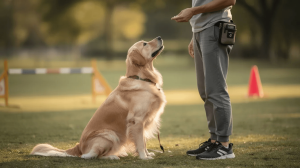
How long does dog obedience training take? There is no universal timeline. A dog may begin understanding a new command within a few short sessions, but using that command reliably at home, in public, and around distractions takes continued practice.
Age, training history, behavior, environment, goals, and owner follow-through all influence progress. The format also matters. A private package may contain a defined number of lessons, while a Board & Train program may last one or two weeks. Those program lengths describe the formal training period, not a guaranteed date when the dog will be permanently trained.
This guide explains what owners mean when they call a dog “trained,” what affects the timeline, how different training formats compare, and what to expect after a formal program ends. It also explains the current program timeframes offered by Off Leash K9 Training Colorado.
The Short Answer
A dog can begin learning foundational commands relatively quickly, but reliability develops in stages.
A new cue such as Sit may start making sense within a few focused sessions. Holding that position for longer periods, responding without seeing a reward, and performing around distractions require additional practice.
For most owners, the useful question is not simply, “How many weeks will this take?” A better question is, “What level of reliability do I want, and what training and follow-through will that require?”
The timeline becomes longer as the goal progresses from:
- Understanding a command in a quiet setting
- Responding consistently at home
- Responding in new environments
- Holding the behavior around distractions
- Performing at greater distances or off leash when appropriate
What Counts as a Trained Dog?
“Trained” can mean different things to different owners. Someone may want a dog that sits before meals and walks without pulling. Another owner may want recall and off-leash obedience around significant distractions.
The available dog obedience training programs cover different skills and levels of reliability. Defining the desired outcome is the first step toward estimating an appropriate timeline.
Understanding a Command
At the earliest stage, the dog is learning what a cue means. The dog may respond correctly in a quiet room when the owner has food or another reward available.
This is progress, but it does not mean the behavior is reliable. The dog is still learning the connection between the cue and the expected action.
Responding Consistently at Home
The next stage is reliable performance in familiar areas such as the living room, yard, or driveway. The owner may begin increasing the length of a Sit, Down, or Place command and practicing when mild distractions are present.
The dog still needs reinforcement and clear feedback. Household consistency becomes especially important during this stage.
Responding in Public or Around Distractions
A dog that responds at home may struggle on a busy sidewalk or around unfamiliar people, dogs, sounds, and wildlife. This does not necessarily mean the dog forgot the command. It often means the environment is more difficult than the setting where the behavior was learned.
Reliable public obedience requires careful increases in duration, distance, and distraction. Off-leash goals add another level of difficulty and should only be pursued where they are safe, legal, and appropriate for the dog.

What Affects the Training Timeline?
Age and Development
Puppies can begin learning simple skills when they come home, often around eight weeks old. Early sessions should be brief and appropriate for the puppy’s development and attention span.
The American Kennel Club recommends keeping early puppy lessons simple and short. Its guidance suggests approximately five to ten minutes for young puppies rather than expecting prolonged formal practice.
Early puppy work usually focuses on:
- Name recognition
- Come
- Sit
- Down
- Place
- Leash introduction
- Crate routines
- House-training routines
- Handling and socialization
Puppies may understand a cue quickly but still lack the maturity and impulse control to perform reliably in every situation. Owners comparing early options can review the available puppy training programs.
Adult and senior dogs can also learn. Older dogs may have established habits that require additional work, and health or mobility limitations may affect session length or the physical behaviors being taught. Age influences the plan, but it is not a reason to assume a dog cannot learn.
Previous Training
A dog with a consistent foundation may progress differently from a dog that has never received formal training.
Previous experience can help when the dog already understands markers, leash pressure, rewards, or foundational commands. It can also complicate training when household members have used different cues or allowed different behaviors.
If “Come” has repeatedly been used when the dog was unlikely to respond, for example, the cue may need to be rebuilt under easier conditions.
Temperament and Motivation
Temperament, confidence, motivation, and emotional state influence learning. Some dogs work readily for food, toys, praise, or movement. Other dogs require more time to become comfortable in a new environment or around a trainer.
Fear, anxiety, and high arousal can make it difficult for a dog to concentrate. These dogs may need slower introductions, carefully managed environments, and an individual training plan.
Breed traits may influence motivation or sensitivity, but breed alone does not determine how long obedience training takes.
Behavior Concerns
Obedience training and behavior modification are related but are not identical.
Teaching Sit, Place, or Heel gives an owner useful communication tools. However, serious aggression, resource guarding, separation-related distress, or intense reactivity may require additional assessment and management beyond foundational obedience.
Complete elimination of major aggression cannot be guaranteed. Dogs with bite histories or significant behavioral concerns should be evaluated individually before the owner chooses a program.
Environment and Distractions
A quiet living room is easier than a busy trail, sidewalk, or public park. Each new environment changes the difficulty of the exercise.
A dog may need to relearn how to perform a familiar command when the surroundings change. Owners should generally begin in an easier setting and add difficulty gradually instead of moving immediately from the living room to a highly distracting location.
Owner Follow-Through
Professional instruction establishes a method and teaches skills, but the owner controls what happens during daily life.
Dogs learn more clearly when household members use the same cues, rules, and expectations. Inconsistent commands or boundaries can slow progress because the dog receives conflicting information.
Short practice periods can be incorporated into existing routines, such as:
- Sitting before going through a door
- Holding Place while the family eats
- Practicing recall on a safe long line
- Walking calmly before being released to sniff
- Waiting politely before meals
The American Kennel Club’s guidance on at-home training practice emphasizes short sessions throughout the week rather than relying on one long practice period.
What Research Says About Training Frequency
Research does not establish one perfect training schedule for every dog.
A controlled study titled “The Effect of Frequency and Duration of Training Sessions on Acquisition and Long-Term Memory in Dogs” examined how session frequency and duration affected dogs’ learning a specific task. The researchers found differences in acquisition based on the training schedule and reported retention of the learned task after four weeks.
That study does not prove that every obedience command should be practiced on the same schedule. It does show that session structure matters and that more training is not automatically better if the sessions are poorly planned.
Owners should watch the individual dog. A productive session can end after several successful repetitions, while a distracted or tired dog may benefit from a break.
Comparing Training Formats
Different formats distribute the teaching and practice differently.
| Format | Published Duration | Owner’s Role | Important Limitation |
| DIY training | Open-ended | Owner plans and conducts all training | Progress depends heavily on the owner’s knowledge and consistency |
| Private lessons | Depends on the package | Owner attends lessons and practices between sessions | Completing a package does not automatically create reliability everywhere |
| Group classes | Usually a defined multiweek course | Owner attends and practices outside class | Skills still require practice in home and public environments |
| Board & Train | Defined by the selected program | Trainer handles the immersive period; owner continues afterward | Eligibility, commands, and follow-up support vary by program |
DIY Training
DIY training can work well for owners who understand timing, reinforcement, progression, and how to manage the environment.
The timeline is open-ended. A dog may begin responding to foundational cues quickly, but leash manners, recall, and work around distractions require continued practice. Owners may also need professional help if progress stalls or safety concerns arise.
Private Lessons
Private lessons allow the owner and dog to work directly with a trainer. This format develops both the dog’s skills and the owner’s handling ability.
The calendar timeline depends on:
- The number of lessons
- Scheduling between appointments
- Homework completion
- The dog’s starting point
- The skills being taught
- The desired level of reliability
Off Leash K9 Training Colorado’s Basic Obedience Package includes four private lessons. The published lesson count defines the package, but the amount of practice required between and after lessons varies.
Group Classes
Group classes commonly run for a defined number of weeks. They give owners instruction while allowing dogs to practice around the controlled presence of other dogs and people.
Completing a class does not mean the dog will immediately perform every skill in every environment. Owners still need to transfer the exercises to their homes, neighborhoods, and daily routines.
Board & Train
Board & Train provides an immersive period with a professional trainer. Off Leash K9 Training Colorado currently offers one-week and two-week options through its Board & Train programs.
The 1-Week Board & Train focuses on on-leash obedience and manners. It includes a 1.5-hour owner session and two refresher lessons. Dogs must be at least five months old and fully vaccinated. This program is not intended for dogs with aggression, anxiety, reactivity, resource guarding, or similar behavioral concerns.
The 2-Week Board & Train includes advanced and off-leash obedience skills, a two-hour owner session, and free refresher lessons for life. Aggressive dogs may not be suitable and require individual evaluation.
Board & Train establishes skills during the immersive period, but owner education and continued practice remain essential after the dog returns home.
The Three Stages of Reliable Obedience
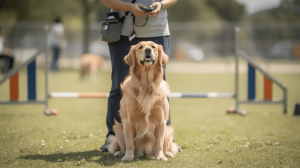
Stage 1: Learning
The dog begins connecting a cue with a behavior.
Training takes place in an environment where the dog can focus. The trainer or owner provides clear feedback and reinforces successful responses.
At this stage, the dog may need guidance or a visible reward. The goal is understanding, not performance under significant distractions.
Stage 2: Building Reliability
Once the dog understands the cue, training begins to add:
- Longer duration
- Greater distance
- Mild distractions
- Different positions or locations
- Less visible reinforcement
Progress is not always linear. A dog may perform well one day and struggle the next because of fatigue, excitement, stress, or environmental changes.
Stage 3: Generalizing Around Distractions
Generalization means helping the dog understand that the same command applies in different places.
Training may move from the living room to the yard, then to a quiet sidewalk, and later to more distracting environments. The difficulty should increase gradually enough that the dog can continue succeeding.
Off-leash obedience is an advanced goal. It requires more than removing the leash from a dog that responds in the backyard. The dog must have a dependable foundation, and the owner must consider the setting, local leash rules, and safety.
Common Reasons Training Takes Longer
Inconsistent Household Rules
When family members use different words or allow different behaviors, the dog receives conflicting information.
Choose one cue for each behavior and agree on household expectations. If the cue is “Come,” everyone should avoid switching between “Come,” “Here,” and repeated use of the dog’s name.
Skipping Practice Between Lessons
A trainer can demonstrate the method, but the dog still needs repetition with the owner.
Practice does not have to require a long formal session. Owners can build obedience into meals, walks, doorways, greetings, and other normal routines.
Increasing Difficulty Too Quickly
A command that works in the kitchen may fail at a crowded park. Moving too quickly can create frustration for both dog and owner.
Lower the difficulty when the dog struggles. Reduce the distance, duration, or distraction, reinforce successful responses, and then build gradually.
Repeating Commands
Repeating “Sit” five times can teach the dog that the first four cues do not matter.
Give the cue clearly and follow the trainer’s handling instructions. If the dog does not respond, evaluate whether the exercise is too difficult or whether the dog needs additional guidance.
Expecting a Program to Replace Owner Involvement
Board & Train can provide an immersive foundation, but the owner must learn how to communicate with the dog afterward.
Private lessons require owner practice from the beginning. Group classes require practice outside class. Every format depends on continued owner participation.
How Long Does Training Last?
Obedience is maintained through daily expectations and periodic practice.
That does not mean owners must conduct formal drills forever. Once the dog understands the skills, obedience can become part of normal life:
- Heel during walks
- Sit at crosswalks
- Place when guests arrive
- Wait at doors
- Come when called in safe, controlled settings
One controlled study found that dogs retained a particular learned task for at least four weeks. That finding should not be interpreted as proof that every obedience skill remains reliable without practice. Performance can change when distractions, household rules, reinforcement, health, or routine change.
A refresher may be useful if the dog begins responding slowly, pulling again, breaking positions, or struggling after a major change such as moving to a new home.
Off Leash K9 Training Colorado Program Timeframes
Off Leash K9 Training Colorado is a veteran-owned, family-operated company serving Colorado dog owners. Its programs have defined lesson counts or immersive periods, but those published durations do not guarantee permanent behavior change on a particular date.
Current program formats include:
Puppy Orientation
Puppy Orientation is one private, in-person session for puppies under five months. It covers early commands, confidence building, socialization guidance, house-training, crate training, reinforcement of good behavior, and owner questions.
Basic Obedience Package
The Basic Obedience Package includes four private lessons. Commands include Come, Sit and Extended Sit, Down and Extended Down, Place and Extended Place, Heel, and Off. The package includes an e-collar and training leash.
1-Week Board & Train
The 1-Week Board & Train is an on-leash program covering foundational commands and manners. It includes an e-collar, a 1.5-hour owner session, and two refresher lessons.
Dogs must be at least five months old and fully vaccinated. The program is not intended for dogs with aggression, anxiety, reactivity, resource guarding, or similar concerns.
2-Week Board & Train
The 2-Week Board & Train includes advanced and off-leash skills, an e-collar, a two-hour owner session, and free refresher lessons for life.
Aggressive dogs may not be suitable for Board & Train and may benefit more from working alongside their owners in private lessons.
Owners can compare the current training programs and confirm eligibility during a consultation.
Choosing a Realistic Timeline for Your Dog
Start by defining the outcome.
Do you want calmer household manners, loose-leash walking, reliable recall, or advanced off-leash obedience? A narrow goal is easier to plan than the general idea of having a “fully trained” dog.
Then consider:
- Your dog’s age and health
- Previous training
- Current behavior concerns
- The environments where the skills must work
- The amount of practice you can maintain
- Whether you want direct owner coaching or an immersive format
- Any program eligibility requirements
Reassess progress based on observable behavior rather than the calendar alone. Ask whether the dog understands the cue, responds without repeated commands, and can perform at the current level of distraction.
If progress stalls, lower the difficulty or ask a trainer whether the plan, reinforcement, environment, or program needs to change.
Ready to Discuss Your Dog’s Training Timeline?
A consultation cannot promise the exact date when a dog will become fully reliable, but it can help establish realistic goals and identify an appropriate starting point.
Contact the training team to discuss your dog’s age, training history, behavior, and goals. The team can explain current program formats, eligibility requirements, and owner responsibilities.
Frequently Asked Questions About Dog Obedience Training Timelines
How long does it take to train a puppy in basic obedience?
There is no fixed puppy-obedience timeline. Puppies can begin learning simple cues when they come home, often around eight weeks old. Early sessions should be brief and focus on foundational skills, routines, and positive exposure.
Understanding a cue can happen relatively quickly, but reliability develops as the puppy matures and practices around gradually increasing distractions.
Can a dog be fully trained in two weeks?
A two-week program can establish the commands and skills included in its curriculum, but it cannot remove the need for owner participation afterward.
The dog must learn to respond to the owner and apply the skills within its normal home and community environments. No ethical trainer can guarantee perfect behavior in every situation after a fixed number of days.
Is an adult or senior dog too old for obedience training?
No. Adult and senior dogs can learn new skills.
The plan may need to account for established habits, physical limitations, hearing or vision changes, motivation, and previous training. A veterinarian should evaluate physical concerns that could affect participation.
How quickly will I notice improvement?
Some owners notice early changes after a few successful practice sessions, but early improvement is not the same as dependable obedience.
The more useful measures are whether the dog understands the cue, responds consistently, and can perform as distractions gradually increase.
Does aggression or severe reactivity take longer?
Aggression and severe reactivity are complex and do not have a universal timeline. Obedience may improve communication and management, but changing emotional responses and reducing risk can require specialized evaluation and ongoing work.
Complete elimination of serious aggression cannot be guaranteed. Owners should disclose every known bite incident and significant behavior concern before enrolling.
How do I learn which program is appropriate for my dog?
The appropriate program depends on your dog’s age, vaccination status, behavior history, current skills, and training goals.
Schedule a consultation and provide an accurate history. The trainer can explain available formats, eligibility requirements, covered commands, and the owner’s responsibilities without promising an exact completion date.