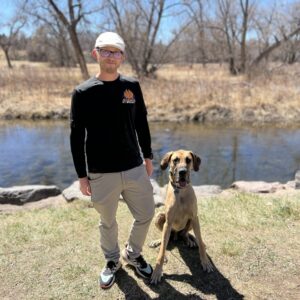

Dog body language signs of stress can appear before more obvious behaviors such as barking, growling, lunging, or snapping. Whether you are walking along a busy Denver sidewalk, visiting a Colorado Springs trail, or practicing obedience at home, your dog communicates through facial expression, posture, movement, and vocalization.
Learning to recognize those signals can help you respond before discomfort escalates. It can also help you distinguish a dog that is confused, frightened, physically uncomfortable, highly aroused, or simply tired.
Common stress-related signals include:
- Lip licking when food is not present
- Yawning outside a normal sleep context
- Showing more of the whites of the eyes
- Ears pulled or pinned back
- A tucked or unusually stiff tail
- Panting without heat or physical exertion
- Pacing or repeatedly changing position
- Freezing or becoming unusually rigid
- Turning the head or body away
- Hiding or attempting to leave
One signal alone does not prove that a dog is stressed. Look at the dog’s full body, the surrounding situation, and changes from that individual dog’s normal behavior.
This guide provides general education and does not replace veterinary care. Sudden behavior changes, signs of pain, persistent anxiety, or serious aggression should be discussed with a veterinarian or qualified behavior professional.
Why Recognizing Dog Stress Matters
Dogs communicate primarily through posture, movement, facial expression, scent, and vocalization. Their earliest signs of discomfort may be subtle, especially when they are trying to avoid conflict.
Recognizing those signs can help an owner:
- Create distance from a trigger
- Stop an interaction before it escalates
- Adjust a training exercise
- Prevent forced greetings
- Identify possible pain or illness
- Provide an appropriate break
- Decide when professional guidance is needed
A dog experiencing significant stress may have difficulty focusing, responding to cues, or learning a new task. Recognizing those signals allows an owner to reduce pressure, increase distance from a trigger, or return to an easier exercise before the situation escalates.
Reading body language is therefore both a communication skill and a practical safety measure.
Start With Your Dog’s Normal Baseline
Before interpreting possible stress signals, observe how your dog looks and moves when relaxed.
Notice:
- The dog’s natural ear position
- How much white normally shows around the eyes
- Normal tail height and movement
- Resting breathing rate
- Typical facial expression
- Normal movement and posture
- Interest in food, play, people, and surroundings
Breed, age, physical structure, coat, ear shape, and tail type can affect how signals appear. A dog with naturally prominent eyes may show visible white even when relaxed. A dog with a curled tail may not display the same tail position as a dog with a long, straight tail.
The most useful question is often not “Does this gesture always mean stress?” but “Is this different from what is normal for this dog in this situation?”
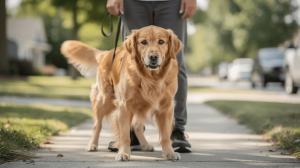
Read Context and Clusters, Not One Signal
A single yawn or lip lick can be ambiguous. A dog may yawn because they are tired or lick their lips after eating.
Body-language interpretation becomes more useful when several signals appear together. For example, a dog may turn the head away, close the mouth, pin the ears back, shift weight away, and lick the lips as an unfamiliar person reaches toward them. That cluster provides more information than the lip lick alone.
A 2026 study of dogs in a social-stress procedure found that behaviors including lip licking, paw lifting, whining, head turning, sniffing at a door, and locomotion varied according to the episode. Attachment style significantly affected head turning.
The findings reinforce an important principle: a behavior should be evaluated in relation to the situation and the individual dog rather than treated as a universal emotional label.
Common Dog Body Language Signs of Stress
Eyes, Mouth, and Facial Tension
A dog’s face can show small but meaningful changes.
Whale Eye
A dog may show more of the white portion of the eye when turning the head away while continuing to watch something concerning. This is commonly called “whale eye.”
Whale eye can indicate stress or conflict when it appears with:
- A tight mouth
- A stiff body
- Avoidance
- Freezing
- Ears pulled back
- A guarded stare
Some dogs naturally show more eye white because of facial anatomy, so context remains essential.
In a 2026 veterinary clinic study, whale eye appeared in 55.2% of 96 clinically healthy dogs during the examination phase.
Lip Licking and Yawning
Lip licking when no food is present may occur during stress, uncertainty, or social pressure. Yawning can also appear when a dog is uncomfortable, although dogs naturally yawn when tired.
In the same veterinary-clinic study, lip licking was the most commonly observed behavior during examinations, appearing in 84.4% of the dogs.
Look for repeated lip licking or yawning together with changes such as:
- Head turning
- Refusing food
- Moving away
- A closed or tight mouth
- Pinned ears
- Crouching
- Freezing
Tight Mouth and Brow
A relaxed dog often has a soft face and loose mouth. A stressed dog may suddenly close the mouth, tighten the muzzle, pull the mouth corners backward, or develop visible tension around the brow and eyes.
Facial tension can be especially useful when the rest of the body is difficult to see.
Ear Position
Ears pulled or pinned back can indicate stress, fear, uncertainty, or an attempt to reduce social pressure.
Rapidly changing ear position may suggest that a dog is monitoring several things or feels conflicted. Forward ears may indicate interest or alertness but should not automatically be interpreted as confidence or aggression.
Compare the position with the dog’s normal ears and read it with the rest of the body. In the 2026 clinic study, ears-back behavior appeared in 51% of dogs during examinations.
Tail Position and Movement
A wagging tail does not always indicate friendliness or happiness. Tail movement reflects emotional arousal, and the meaning depends on the tail’s height, speed, stiffness, and movement of the rest of the body.
Possible stress-related changes include:
- Tail tucked under the body
- Tail held lower than usual
- A high, stiff tail
- A short, rapid wag with little hip movement
- Tail movement stopping suddenly
A loose, sweeping wag with relaxed hips generally differs from a high, rigid tail with movement only near the tip. Always evaluate the entire dog.
Posture and Weight Distribution
A lowered body, weight shifted backward, leaning away, crouching, or freezing can indicate fear, uncertainty, or discomfort.
A dog may also:
- Curve the body away
- Attempt to hide behind the owner
- Refuse to move forward
- Place more weight on the rear legs
- Become unusually still
- Move slowly or cautiously
- Repeatedly attempt to leave
In the veterinary-clinic study, 21.9% of dogs crouched during the examination phase. The absence of crouching does not mean a dog is comfortable; individual dogs use different coping strategies.
Pacing, Trembling, and Panting
Dogs may pace when they cannot settle or are anticipating something uncomfortable. Trembling can occur with fear, cold, pain, excitement, or medical conditions.
Panting may reflect heat, exertion, excitement, pain, or stress. Panting is more meaningful as a stress signal when it occurs in a cool environment without recent activity and appears with other behavioral changes.
The VCA guide to canine stress also identifies pacing, shaking, panting, drooling, licking, changes in elimination, avoidance, and hiding as possible stress-related behaviors.
Displacement and Avoidance Behaviors
A displacement behavior is a normal action that appears in a situation where it seems out of place.
Examples can include:
- Suddenly sniffing the ground
- Scratching during an interaction
- Shaking off when the coat is dry
- Grooming
- Turning away
- Wandering away from training
- Focusing on an unrelated object
These behaviors may help a dog pause or disengage from social pressure. They should not automatically be labeled stress, but they deserve attention when they repeatedly appear during the same trigger or interaction.
Raised Hackles
Raised hair along the shoulders or back is called piloerection. It indicates arousal but does not identify the exact emotion.
A dog may raise the hackles during fear, excitement, uncertainty, play, defensive behavior, or intense interest. Read the face, tail, movement, and surrounding situation before deciding what it means.

Stress During Dog Training
Stress during training may appear as:
- Slower responses
- Repeatedly looking away
- Leaving the training area
- Refusing food the dog normally accepts
- Sudden sniffing or scratching
- Freezing
- Increased vocalization
- Frantic or unfocused movement
- Repeated mistakes on a familiar behavior
These signs do not necessarily mean that the dog is stubborn or deliberately refusing to cooperate. The exercise may be too difficult, the environment may be too distracting, or the dog may not understand the request.
When stress signals increase:
- Pause the exercise.
- Move farther from distractions.
- Return to an easier skill.
- Shorten the session.
- Check whether the dog needs water, rest, movement, or a bathroom break.
- End the session if the dog does not recover.
Training equipment should not be used to push a dog through escalating distress. Owners should understand the purpose, fit, and correct use of any equipment included in a training program.
Learn more about available dog obedience training before selecting a format or training method.
Stress Around People and Other Dogs
Social stress can appear during greetings, play, handling, or crowded outings.
Watch for:
- Hiding behind the owner
- Turning the head or body away
- Refusing to approach
- A tucked tail
- A suddenly stiff posture
- Freezing during petting
- Repeated attempts to leave
- Intense barking or lunging
- A hard stare
- Growling or air snapping
Some dogs respond with intense greetings that later shift into stiff or avoidant behavior. Mounting, persistent sniffing, and repeated barking can occur during stress or overarousal, but they may also appear in other contexts.
Healthy play generally includes loose movement, pauses, role reversals, and opportunities for both dogs to disengage. End or interrupt an interaction when one dog repeatedly attempts to leave, hides, becomes rigid, or cannot take a break.
Do not force a dog to greet an unfamiliar person or animal.
Environmental and Situational Stress
Common stressors can include:
- Veterinary examinations
- Grooming
- Car travel
- Thunderstorms
- Fireworks
- Construction noise
- Moving to a new home
- Boarding
- Crowded public spaces
- Unfamiliar visitors
- Changes in household routine
Colorado dogs may encounter additional challenges such as busy trailheads, wildlife, rapidly changing weather, crowded patios, and seasonal fireworks.
Gradual, controlled exposure can help some dogs become more comfortable. Repeatedly placing a frightened dog in an overwhelming situation without adequate distance or recovery may intensify the problem.
What to Do When You Notice Stress
Step 1: Pause
Stop the current interaction, training repetition, or forward movement. Avoid adding more cues or physical pressure while you assess the situation.
Step 2: Identify the Likely Trigger
Look for what changed immediately before the signals appeared. Possible triggers include another dog, a person reaching toward the dog, a loud sound, handling, confined space, pain, or an overly difficult training task.
Step 3: Create Distance
Move away from the trigger when it is safe to do so. Cross the street, step behind a visual barrier, leave the room, or increase space between dogs.
Distance often reduces social pressure and allows the dog to recover.
Step 4: Offer a Familiar Behavior Only if the Dog Can Engage
A simple cue or treat scatter may help some dogs refocus. If your dog turns away, refuses food, freezes, or becomes more distressed, stop asking for cues and create more distance instead.
Step 5: Watch for Recovery
Possible signs of recovery include:
- Softer facial muscles
- Normal breathing
- Looser movement
- Returning interest in the environment
- Voluntary engagement
- Normal ear and tail position
- Ability to eat or respond to a familiar cue
If the dog does not recover, end the activity and provide a quiet place to rest.
When Stress Signs May Indicate a Medical Problem
Behavior changes can be associated with pain, illness, sensory decline, medication effects, or cognitive changes.
Contact a veterinarian when:
- Stress-related behavior appears suddenly.
- A previously social dog begins avoiding touch.
- Panting occurs at rest without an obvious reason.
- Pacing becomes frequent, especially in a senior dog.
- The dog stops eating.
- Trembling or hiding becomes persistent.
- The dog reacts defensively when a particular area is touched.
- Behavior changes appear with vomiting, diarrhea, limping, or other physical signs.
A veterinarian can evaluate potential medical causes before the behavior is treated solely as a training problem.

Common Mistakes When Reading Dog Stress
Treating One Signal as Proof
One yawn, tail wag, lip lick, or shake-off does not establish an emotional state. Look for changes from baseline, combinations of signals, and a relevant trigger.
Calling the Dog Stubborn
A dog that stops responding may be distracted, confused, frightened, tired, or physically uncomfortable. Reduce difficulty before assuming deliberate noncompliance.
Punishing Growling
Growling communicates discomfort and should be taken seriously. Punishing it may suppress an important warning without resolving the reason the dog felt threatened.
Create space, identify the trigger, and seek professional guidance when growling is frequent, intense, or connected to guarding or bite risk.
Forcing Interaction
Do not force a frightened dog to accept petting, greetings, restraint, or proximity to another animal. Allowing distance can prevent escalation.
Assuming Comfort Reinforces Fear
Calm support does not inherently reinforce fear. However, holding a dog in place, crowding them, forcing physical contact, or repeatedly asking for engagement can increase distress.
Give the dog room to move away and offer support without restraint.
Helping Reduce Everyday Stress
Owners can support recovery and predictability by:
- Maintaining an appropriate routine
- Providing adequate sleep and rest
- Using shorter training sessions
- Allowing decompression after difficult events
- Providing a quiet retreat
- Avoiding forced social contact
- Introducing new environments gradually
- Tracking triggers and recovery
- Using exercise and enrichment appropriate for the dog
- Discussing sudden changes with a veterinarian
A crate, bed, mat, or quiet room can serve as a resting space when the dog has been taught to use it comfortably. Children and visitors should leave the dog alone while the dog is resting there.
When to Contact a Professional Trainer
Professional guidance may be helpful when:
- Stress repeatedly interferes with walks or training.
- The dog lunges, growls, or snaps.
- The dog has a bite history.
- Owners cannot identify the trigger.
- The dog cannot recover after normal events.
- The behavior is becoming more frequent or intense.
- Household members respond inconsistently.
- Owners need help applying management and obedience skills safely.
Off Leash K9 Training Colorado offers private lessons, puppy training, obedience programs, and Board & Train options. The appropriate format depends on the dog’s age, behavior history, goals, and program eligibility.
Owners of dogs with significant fear, anxiety, reactivity, aggression, or a bite history should disclose those concerns during the consultation rather than assuming every program is suitable.
Explore dog behavior training or private dog training to learn about available options.
Frequently Asked Questions About Dog Stress Signals
What are the most common dog body language signs of stress?
Common signs include lip licking, yawning, whale eye, ears pulled back, a tucked tail, panting, pacing, freezing, crouching, turning away, hiding, and attempting to leave. Interpret these behaviors with the situation and the dog’s normal baseline.
Does a wagging tail mean a dog is happy?
Not always. A wagging tail indicates emotional arousal, but it does not identify the exact emotion. A loose, sweeping wag with relaxed movement differs from a high, stiff tail with short, rapid motion.
Is whale eye always a sign of stress?
No. Some dogs naturally show more eye white because of their facial structure or viewing angle. Whale eye becomes more meaningful when it appears with tension, avoidance, freezing, pinned ears, or another identifiable trigger.
Why does my dog yawn or lick its lips during training?
Yawning and lip licking may occur during stress, confusion, anticipation, or social pressure, but they can also occur for ordinary reasons. Consider what happened immediately before the behavior and whether other stress-related signals appeared.
Should I comfort a scared dog?
You can offer calm support and allow the dog to remain near you. Avoid restraining the dog, forcing contact, crowding them, or preventing them from moving away. Create distance from the trigger whenever possible.
Should growling be corrected?
Growling should be treated as information that the dog is uncomfortable. Create space and identify the cause. Repeated growling, guarding, or growling connected to bite risk should be discussed with an appropriate professional.
When should I contact a veterinarian?
Contact a veterinarian when stress-related behavior begins suddenly, appears with physical symptoms, involves sensitivity to touch, affects appetite or sleep, or becomes persistent. Pain and medical conditions can cause behavior changes.
Can training help a stressed or reactive dog?
Training may improve communication, obedience, owner handling, and management. Results depend on the dog, cause of the behavior, environment, program, and owner follow-through. Complete resolution of serious fear, anxiety, reactivity, or aggression cannot be guaranteed.
Get Professional Guidance
Understanding dog body language signs of stress helps you respond earlier, adjust training appropriately, and make safer decisions around people, dogs, and unfamiliar environments.
If your dog frequently shows stress, reactivity, or difficulty responding around distractions, review the current training options and contact the training team to discuss an appropriate next step.