
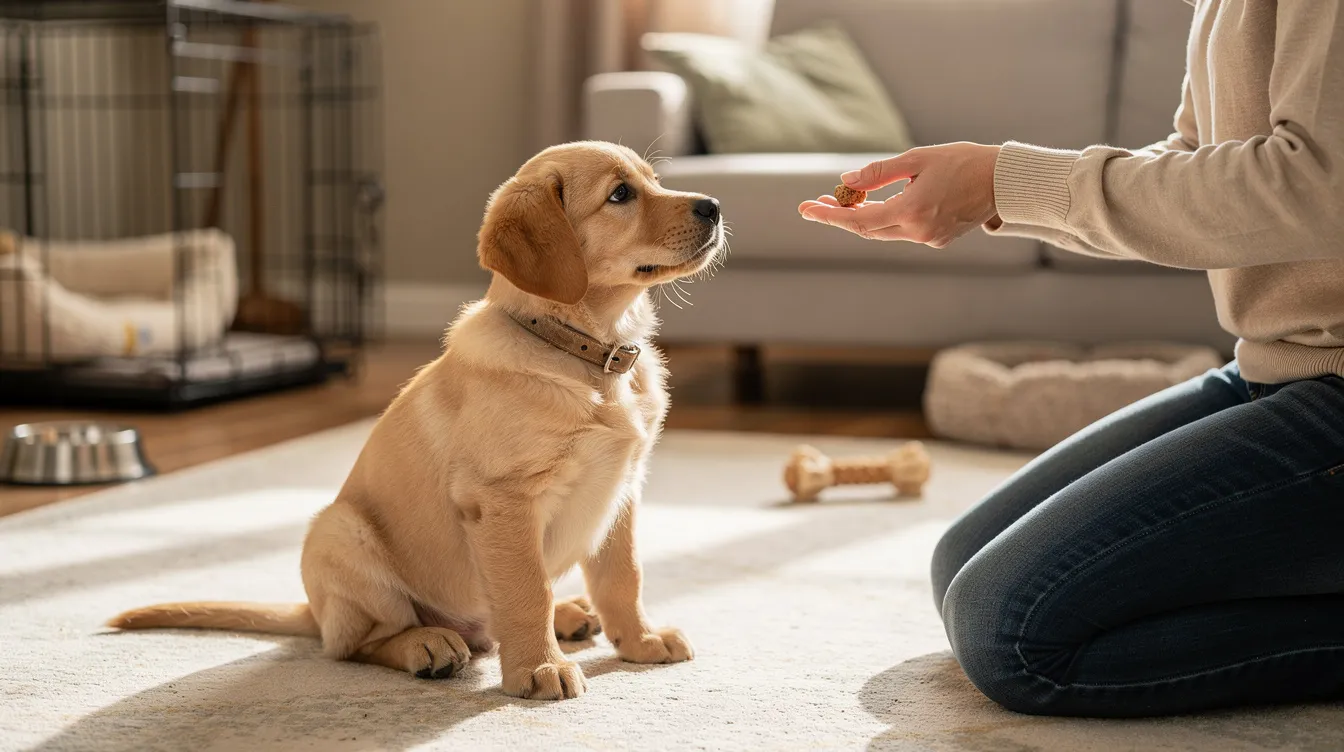
Training should start as early as 8 weeks old-the moment your new pup comes home. Puppies learn best between 6 and 16 weeks of age, and every day within that window is an opportunity to shape the adult dog your puppy will become. Waiting until a puppy is older to begin training means missing the most neurologically receptive period of their entire life.
This guide covers the complete puppy training timeline from eight weeks through adolescence, including basic obedience, socialization training, and behavior modification strategies tailored for Colorado dog owners. Whether you live in urban Denver, suburban Colorado Springs, or a rural mountain community, you’ll find age-specific guidance for training your puppy in the environments and conditions unique to our state.
Direct answer: Begin training immediately when your puppy arrives home at 8 weeks of age. Start with basic commands like sit, stay, and come, alongside crate training, potty training, and early socialization. The first few months are crucial for establishing behavioral expectations.
Here’s what you’ll gain from this guide:
- A detailed puppy training schedule mapped to developmental stages
- Age-appropriate exercises from 8 weeks through 18 months
- When to transition from home training to professional programs
- Behavior prevention strategies that reduce long-term consequences of delayed training
- Colorado-specific socialization considerations for altitude, weather, and urban environments
Understanding Puppy Development Stages
Puppy development isn’t a single linear process-it unfolds across distinct neurological stages, each with different learning capacities and behavioral sensitivities. Understanding these stages helps you match your training approach to what your puppy’s brain is actually ready to absorb, rather than pushing too hard or-more commonly-waiting too long.
Critical Socialization Period (8–16 Weeks)
The critical socialization window occurs between 8 and 16 weeks. During this period, puppies are uniquely open to new experiences-people, other animals, sounds, surfaces, and different environments all get filed as “normal” rather than “threatening.” According to UC Davis veterinary research, this critical social development period begins around 3 weeks with the breeder and extends to approximately 14 weeks, with extended socialization benefits lasting through 16–20 weeks depending on breed.
Socialization helps prevent fear and builds confidence in puppies. Those who miss this window are significantly more likely to develop fear, aggression, and separation anxiety as adult dogs. UC Davis recommends puppies have roughly 90 different positive experiences before 14 weeks of age-exposure to various people, other dogs, surfaces, sounds, and environments.
This timing aligns directly with programs like Off-Leash K9’s Puppy Training orientation, which is designed for puppies in exactly this developmental sweet spot.
Basic Learning Phase (8–20 Weeks)
Puppies learn best between 6 and 16 weeks of age, but their learning capacity remains high through about 20 weeks. During this phase, neurological plasticity is at its peak-the brain is literally wiring connections based on experience. Classic behavioral genetics research by Scott and Fuller found that approximately 65% of a dog’s behavioral development is shaped by environment and experience, not genetics alone.
Training should begin as early as 8 weeks old with short, positive training sessions. Puppy training can start at 8 weeks old because young puppies at this age already possess the cognitive ability to form associations between a basic cue, a behavior, and a reward. Training sessions should last about five minutes each, respecting their short attention spans while building a solid foundation of desired behaviors.
Adolescent Phase (6–18 Months)
As your puppy grows past the socialization window into adolescence, the learning dynamic shifts. The juvenile phase brings increased independence, hormonal changes, and what many owners describe as “selective hearing.” A second fear period may emerge between 6–14 months, and behaviors that seemed solid can appear to regress overnight.
Breed and size play major roles here. Larger breeds mature more slowly-both physically and neurologically-so the adolescent phase can extend to 18–24 months. Consistency in training is vital as puppies enter adolescence, because this is the phase where early training either pays dividends or gaps become glaring. Dogs who didn’t receive early training often require professional behavior modification at this stage, making intervention more time-consuming and costly.
This natural progression from foundation to advanced work is why a structured puppy training schedule by age matters so much.
Essential Training Areas by Age
With developmental stages as context, here’s what to focus on at each age-broken into practical, actionable training areas that build sequentially.
8–12 Weeks: Foundation Building
The moment your puppy comes home, training begins. This isn’t about perfection-it’s about introducing structure and creating a positive association with learning.
Basic commands introduction: Start with sit, stay, and come using positive reinforcement. Rewards can include treats, toys, or praise-whatever motivates your individual pup. Use the same word consistently for each command. Keep sessions brief and end on a positive note, with tasty treats and genuine enthusiasm. Positive reinforcement encourages desired behaviors in puppies and helps build trust between puppy and owner.
House training fundamentals: Potty training can start at 8 to 12 weeks old. Puppies can hold their pee for approximately one hour per month of age, so an 8-week-old puppy needs potty breaks every two hours. Take puppies outside for 30 minutes to encourage potty breaks, and praise and treat them immediately after they potty outside. Puppy potty training typically takes one week to one month with consistent scheduling. Establish a routine around feeding, napping, and play to build reliable elimination habits.
Crate training basics: Introduce the crate as a calm, safe space-never as punishment. Begin with short intervals, offering a treat when your pup enters voluntarily. Crate training supports house training, reduces destructive behavior, and gives your puppy a place to decompress in a new environment. For Colorado puppies, the crate also becomes essential during travel to mountain trails or ski towns.
Early training focuses on household rules and basic handling-touching paws, ears, and mouth to prepare for grooming and veterinary visits. Teach house training and bite inhibition early, before habits become entrenched.
12–16 Weeks: Expanding Skills
By 12 weeks, your puppy should have all their vaccinations (or be close to completing them), opening up opportunities for broader socialization and more structured training.
Leash training and walking manners: Loose-leash walking should be practiced to navigate urban distractions-critical for Colorado’s busy trail systems and downtown areas. Begin in low-distraction settings like your backyard before progressing to sidewalks and parks. Leash training at this age prevents pulling habits that become much harder to correct in a 70-pound adult dog.
Continued socialization: Puppies should be exposed to various environments during socialization. Urban socialization is important due to diverse environments in cities like Denver and Colorado Springs-traffic sounds, cyclists, other dogs on paths, and seasonal crowds. Introduce puppies to various environments for effective socialization: different floor surfaces, stairs, elevators, car rides, and weather conditions. Colorado’s altitude, cold snaps, and snow make early exposure to winter gear (coats, booties) and cold surfaces especially valuable. Socialization includes exposure to different people and animals-aim for variety in age, appearance, and energy level.
Basic impulse control exercises: Begin teaching “leave it” and “drop it.” Practice eye contact before offering rewards. These exercises teach your pup that patience and good behavior produce better outcomes than impulsive reactions. Use this phase to introduce your puppy to other animals in controlled settings-friends’ vaccinated dogs, calm older dogs-rather than unpredictable dog parks where disease risk and uncontrolled interactions remain concerns until vaccinations are complete. Review our puppy socialization checklist for a comprehensive guide.
16–20 Weeks: Advanced Foundation
By now, your puppy has the cognitive and physical development to handle more demanding training.
Reliable recall training: This is the single most important safety command, especially for Colorado owners who envision off-leash hiking. Practice recall in gradually increasing levels of distraction-first indoors, then in your yard, then in enclosed outdoor spaces. Offer rewards consistently and make coming to you the most rewarding thing your puppy can do.
Distraction proofing basic commands: Take the sit, stay, and come your puppy learned at 8 weeks and practice them in new contexts-near other dogs, with showing excitement from passersby, or while wildlife is visible at a distance. Commands that only work in your kitchen aren’t truly learned.
Introduction to off-leash concepts: Begin controlled off-leash practice in safe, enclosed areas only. Puppies should learn basic commands by 5–6 months of age with enough reliability to begin this progression. This is also the age to start thinking about whether your training goals call for professional support. Puppies who have built a strong recall foundation are ideal candidates for more advanced obedience training.
Training should continue throughout a dog’s life, but the work you do before 20 weeks establishes patterns that carry through adulthood.
Professional Training Options and Implementation
Home training is essential from day one, but there are clear inflection points where professional guidance accelerates progress, prevents problems, and teaches techniques most owners haven’t encountered. Knowing when to seek help-and which program fits your puppy’s age and needs-makes all the difference.
Puppy Orientation Program ($125)
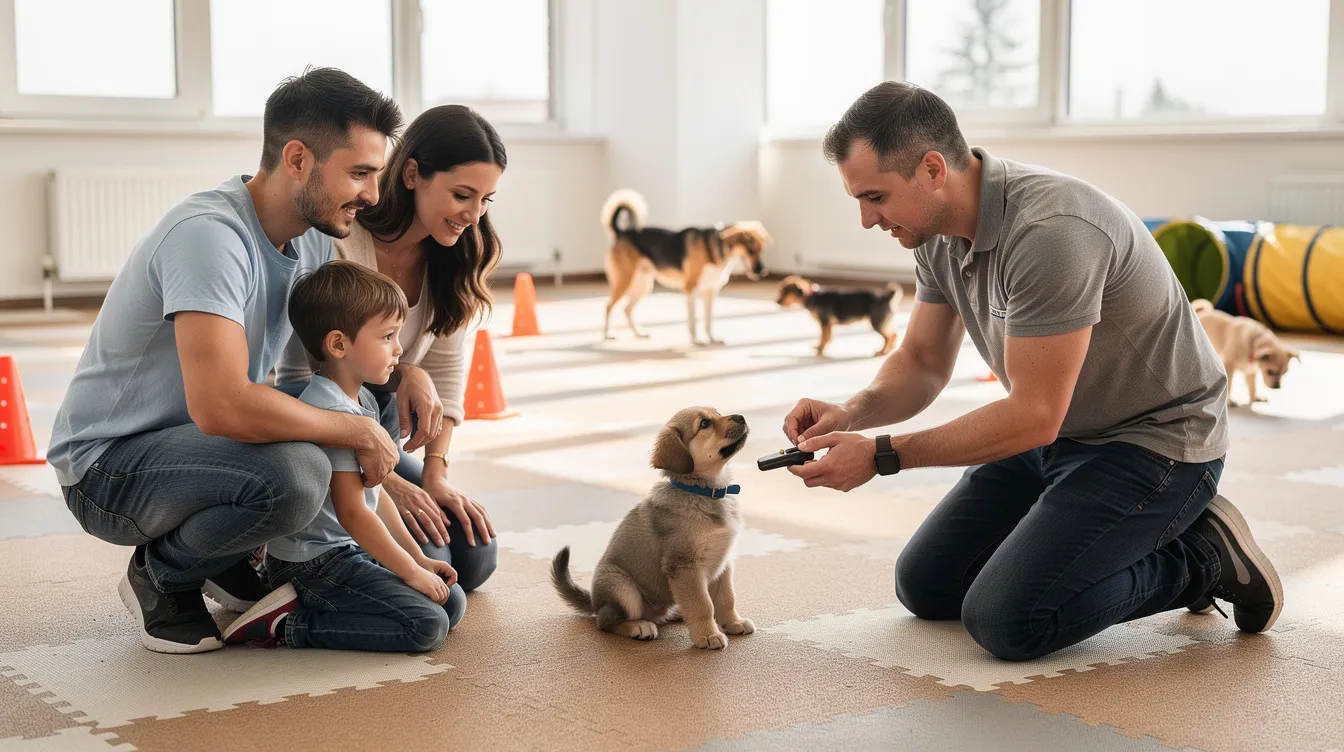
For new puppy owners seeking a structured start, the Puppy Orientation is designed for puppies in the 8–12 week range-right in the heart of the critical socialization window.
This program introduces proper handling, early obedience cues, crate training guidance, and socialization strategies. It provides a professional foundation so that all this early work follows a scientifically backed method rather than trial and error. Puppy classes promote early social skills and obedience techniques, and having professional direction from the start helps owners avoid common mistakes during the most impressionable weeks.
Expected outcomes: Owners leave with a clear daily practice routine, proper reward timing, and confidence in managing basic puppy training at home.
Basic Obedience Training ($675)
Basic obedience training is typically suited for puppies starting between 3–6 months, though dogs of any age benefit. Obedience training includes commands like sit, stay, and come, along with leash manners, impulse control, and behavior modification for emerging issues.
The private lesson format is particularly advantageous for young puppies because it allows direct training tailored to your pup’s specific temperament, breed tendencies, and the Colorado environments you frequent. Unlike group classes, private sessions adapt in real time to what your puppy needs most.
Positive reinforcement is the recommended training method throughout all programs. Dominance-based handling techniques and harsh corrections are avoided-these approaches carry significant risk of fear imprinting, especially in puppies under 6 months. Instead, rewards work to build cooperation and enthusiasm for learning.
Board & Train Programs
When home training plateaus or behavior issues require intensive intervention, board and train programs provide immersive professional training. These are generally appropriate for puppies aged 4 months and older who have at least basic impulse control.
| Feature | 1-Week Board & Train ($2,200) | 2-Week Board & Train ($3,200) |
|---|---|---|
| Duration | 7 days intensive | 14 days intensive |
| Best for | Puppies with basic foundation needing acceleration | Puppies with gaps in socialization or more complex needs |
| Typical outcomes | Reliable basic commands, improved leash manners | Advanced obedience, distraction proofing, off-leash foundation |
| Ideal age | 4–6 months+ | 4–18 months |
Board and train is especially valuable for Colorado owners whose lifestyles demand reliable off-leash behavior on trails, at campgrounds, or in mountain communities where wildlife encounters make recall a safety issue-not just a convenience.
For complete pricing and options, visit the training packages page.
Common Training Challenges and Solutions
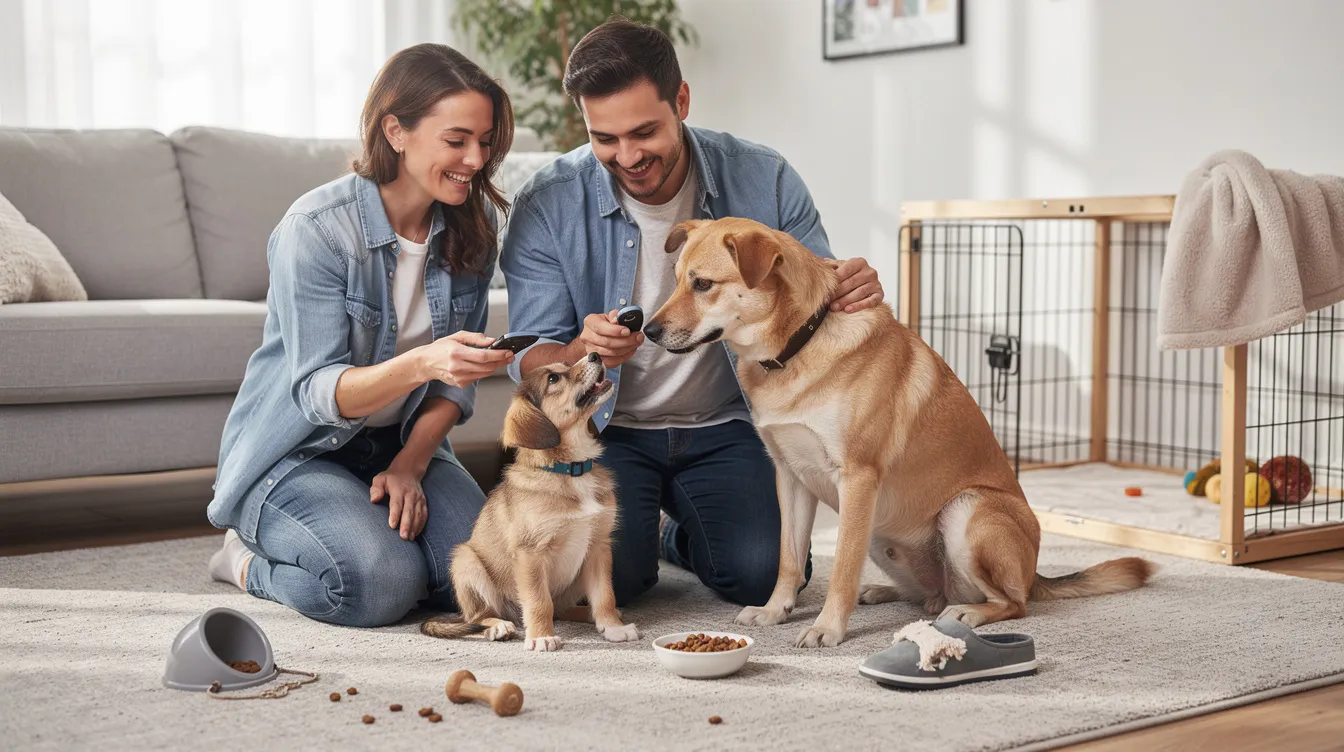
Even with the best puppy training timeline, challenges arise. The key is addressing them early-before they calcify into adult behavior problems with serious long term consequences.
Puppy Biting and Mouthing
Biting is normal puppy behavior, not aggression. Puppies learn bite inhibition through interactions with littermates and through redirection by their owners. Between 8–16 weeks, redirect mouthing toward appropriate chew toys and teach the “off” command to correct behavior calmly. For older puppies who are showing excitement through escalated nipping, impulse control exercises-asking for a sit before play resumes-are more effective than punishment. Avoid using correcting devices or harsh corrections with young puppies, as negative experiences during fear periods can create lasting behavioral damage.
House Training Accidents
Persistent potty training issues almost always stem from inconsistency rather than defiance. The solution: maintain a strict schedule of potty breaks tied to meals, naps, and play. Take your pup outside immediately after waking and after every meal. When accidents happen indoors, clean thoroughly and adjust your timing-don’t scold after the fact, as puppies can’t connect delayed correction to past behavior.
For Colorado owners in apartments or condos, winter weather adds a layer of difficulty. Establish a designated outdoor potty area and begin acclimating your puppy to cold and snow early. If persistent issues continue beyond 4 months, professional guidance through dog behavior training can identify underlying causes.
Fear Periods and Socialization Gaps
The first major fear period occurs around 8–11 weeks of age, with a second between 6–14 months. If your puppy was not adequately socialized by 16 weeks, puppies who didn’t start socialization early aren’t simply behind; they’re working against closing neurological windows-fear-based behaviors can emerge: reactivity toward other dogs, avoidance of new people, or panic in unfamiliar environments.
The solution isn’t to force exposure. Instead, use controlled, gradual introductions paired with high-value treats to build positive associations. For puppies with significant socialization gaps or fear responses, professional behavior modification is strongly recommended. Simply bringing a fearful dog to dog parks and hoping for the best typically makes things worse. A structured, professional approach addresses the root cause rather than just the symptoms.
Conclusion and Next Steps
The answer to “what age to start training a puppy” is clear: begin at 8 weeks old, and treat every week through 16 weeks as prime developmental territory. Short, positive training sessions, consistent routines, and broad socialization during this window produce a confident, well-mannered adult dog. Training doesn’t stop after puppyhood-it continues throughout a dog’s life-but the foundation you build in those first months determines how smooth the road ahead will be.
Your immediate action steps:
- Today: Start basic commands (sit, come) and establish a potty training and crate training routine
- This week: Begin controlled socialization-introduce your puppy to new people, surfaces, and sounds in safe settings
- Within 2 weeks: Schedule a free 30-minute consultation with Off-Leash K9 Training Colorado to assess your puppy’s developmental stage and match them to the right program
- By 12 weeks: Enroll in a structured puppy program to formalize socialization and obedience work
Related topics worth exploring as your puppy grows: advanced off-leash training readiness, e-collar training foundations, and how to fit everyday obedience into your schedule.
Additional Resources
- Denver & Colorado Springs locations: Reach Out via the FAQ page for scheduling and location details
- Full pricing: View all training packages including puppy orientation, private lessons, and board & train options
- Satisfaction guarantee: All programs are backed by a 100% satisfaction guarantee
- Real results: Off-Leash K9 Training Colorado maintains a track record of successful puppy training outcomes, with client testimonials demonstrating puppies who progressed from basic puppy training through reliable off-leash obedience