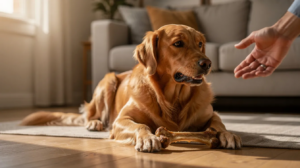
Resource guarding is a natural protective behavior in which dogs defend access to valuable items, including food, toys, bones, sleeping spots, and sometimes people. Although guarding resources can be a normal canine behavior, it becomes a safety concern when a dog uses freezing, growling, snapping, lunging, or biting to prevent access.
This article covers what resource guarding looks like, factors that may contribute to it, ways to encourage safer habits in puppies, and when professional training or behavior modification may be necessary. It is written for Colorado dog owners who have noticed guarding behavior or want to establish safer routines before problems develop.
The direct answer: Resource guarding can often be improved through careful management, counter-conditioning, desensitization, and an individualized behavior modification plan. Results vary by dog, trigger, environment, and bite history, so complete resolution cannot be guaranteed. Dogs that growl, snap, lunge, or bite should be evaluated by a veterinarian and a qualified behavior professional experienced in resource guarding.
Here is what you will gain from this article:
- How to recognize early warning signs of guarding
- Safer practices for puppies and adult dogs
- Professional training options and program considerations
- Safety management protocols, especially for households with children
- Clear next steps for getting support in Denver and Colorado Springs
Understanding Resource Guarding Behavior
Resource guarding describes behavior intended to maintain control of something the dog considers valuable. The resource may be food, a toy, a resting area, a stolen household object, or access to a particular person.
The behavior becomes problematic when it creates stress, conflict, or a risk of injury. Guarding can involve subtle avoidance, such as moving away with an item, or more overt behavior, such as growling, snapping, lunging, or biting.
In one shelter resource-guarding study, approximately 15% of the evaluated dogs were classified as resource guarders. Among the dogs identified as guarding, 83.6% responded during a possession test, 30.8% responded during a food-bowl test, and 17.1% responded during both tests. These findings describe one shelter population and should not be treated as prevalence estimates for all pet dogs.
Types of Resource Guarding
Resource guarding may involve food, toys, spaces, or access to people. Identifying the resource and the circumstances surrounding the behavior helps professionals develop an appropriate management and training plan.
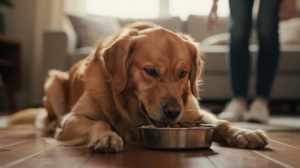
Food guarding occurs around bowls, treats, stolen food, and other edible items. You might notice your dog eating faster, stiffening, freezing, or growling when a person or animal approaches during a meal. Food guarding can be influenced by genetics, learning history, anxiety, competition, and the value of the resource, but it should not automatically be attributed to previous food scarcity.
Object guarding involves toys, bones, chew items, or household objects the dog has claimed. A dog might grab a sock and refuse to release it or become defensive when someone approaches a high-value chew. Off-Leash K9 Training Colorado’s dog behavior training in Denver includes support for resource guarding and other behavior concerns.
Location guarding involves beds, couches, crates, doorways, or other preferred spaces. Some dogs become defensive only when unfamiliar people approach their resting area, while others may guard a location from household members or other animals.
Guarding can also appear to involve a person. A dog may position themselves between an owner and another person or animal, block access, or react when someone approaches. Similar behavior can also result from fear, anxiety, conflict, or attention-seeking, so the motivation should be assessed rather than assumed.
Warning Signs and Escalation
Early signs of resource guarding may include eating faster, freezing, stiffening, staring, showing the whites of the eyes, lowering the head over an object, or positioning the body to block access.
More noticeable behaviors can include moving away with the resource, growling, baring teeth, snapping, lunging, or biting. These responses do not always occur in a predictable sequence. A dog’s reaction may change depending on the resource, person, environment, and distance involved.
Punishing warnings such as growling may increase fear or suppress an important warning without changing the motivation behind the guarding. This can make the dog’s future behavior more difficult to interpret and may increase safety risks.
Treat growling as information that the dog is uncomfortable. Create distance, secure the environment, and avoid reaching for the guarded item. The American Veterinary Society of Animal Behavior advises against dominance-based confrontation and recommends scientifically supported methods such as reinforcement, desensitization, and counter-conditioning.
Early recognition and management can reduce opportunities for guarding to be repeatedly rehearsed. However, prevention is not always possible, and established resource guarding can still be addressed with an appropriate plan.
Prevention and Early Intervention
Early training can help owners establish safer routines around food, toys, handling, and household objects. Off-Leash K9 Training’s Puppy Orientation program covers foundational topics such as basic commands, confidence, socialization, housebreaking, and crate training.
These skills can support a puppy’s general development, but no orientation or training program can guarantee that resource guarding will never develop. Adult dogs showing early guarding behavior should receive prompt management and an appropriate assessment.
Puppy Prevention Strategies
Positive experiences around food may help puppies become more comfortable with people nearby, but hand-feeding has not been proven to prevent resource guarding in every dog.
Avoid repeatedly touching a puppy’s bowl or removing food to test their reaction. Allow the puppy to eat without unnecessary interruption. When the puppy remains relaxed, an owner may occasionally add a higher-value treat from a safe distance.
Do not attempt food-bowl exercises without professional guidance if the puppy already freezes, growls, snaps, or guards the area.
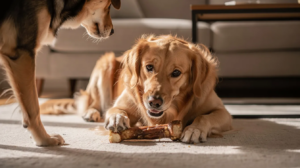
Teaching a voluntary “drop it” or trade cue can support safer object handling. Begin with low-value toys and reward the puppy for willingly releasing the object. Do not test this skill with an item the puppy is actively guarding.
A large cross-sectional resource-guarding survey found an association between owners teaching a “drop” response and a lower likelihood of reported biting. However, the study design does not prove that teaching the cue directly caused the reduction.
Puppies should not be forced to share food, chews, or valuable toys with people or other dogs. Feed dogs separately, supervise access to high-value resources, and teach voluntary trading through carefully managed exercises. General puppy training in Denver can help establish foundational cues and management routines.
Adult Dog Early Intervention
For an adult dog that stiffens over a food bowl or gives a hard stare when someone approaches a bone, immediate management is the first step.
Do not forcefully remove food or objects from a guarding dog. Doing so may increase conflict and confirms that approaching people may take away valued resources. Use barriers or distance to prevent access to dangerous objects, and contact a professional if an item cannot be retrieved safely.
Feed dogs in separate rooms in multi-dog households, remove high-value chews before visitors arrive, and avoid surprising a dog that is eating or resting with a prized item.
The cross-sectional survey cited above found that dogs in multi-dog homes were more likely to display reported aggression, avoidance, and rapid eating around resources. This association does not prove that living with another dog caused the behavior, but separate feeding and careful supervision remain sensible safety measures.
Seek professional guidance if guarding is worsening, spreading to new resources, involving snapping or biting, or creating a risk for children, adults, or other animals. Off-Leash K9 Training offers a free 30-minute consultation to discuss the behavior and possible program options.
A veterinary examination may also be necessary because pain, illness, anxiety, or other medical concerns can contribute to sudden or worsening aggression.
Professional Training and Treatment Methods
Moderate to severe resource guarding requires a safety-first approach and professional expertise. Well-intentioned but inappropriate intervention can increase conflict or make the dog more anxious.
Off-Leash K9 Training Colorado provides behavior training for dogs displaying aggression, reactivity, resource guarding, and other behavior concerns.
Evaluation and Customized Training Plans
Professional guidance is particularly important for unpredictable or escalating guarding behavior. An assessment may consider:
- Which resources trigger the behavior
- Whether the dog guards from people, dogs, or both
- The dog’s warning signals and bite history
- Whether guarding occurs only in particular locations
- The dog’s health, age, temperament, and training history
- The presence of children, visitors, or other animals
- The household’s ability to maintain separation and management
A qualified professional experienced in aggression and resource guarding can develop an individualized plan based on these factors. The plan should establish safety rules from the beginning, including who may participate in training, how resources will be managed, and when physical barriers are required.
Treatment timelines vary according to the resources guarded, bite history, household environment, underlying health, and consistency of management.
One shelter food-guarding study reported encouraging outcomes three months after adoption among dogs enrolled in a management and behavior modification program. However, those findings should not be used to promise a standard timeline for privately owned dogs or other forms of guarding.
Some dogs improve relatively quickly, while others require long-term management. A veterinary examination may be recommended to investigate pain, illness, or anxiety that could contribute to the behavior.
Training Techniques and Programs
Positive reinforcement, careful management, and gradual behavior modification are commonly used to address resource guarding.
Counter-conditioning changes the dog’s emotional response by pairing the presence of a trigger with something the dog values. For example, a carefully planned exercise may involve delivering a higher-value treat from a distance at which the dog remains relaxed. The person should not reach for the guarded item or continue approaching after the dog shows tension.
Systematic desensitization introduces the trigger gradually while keeping the dog below the point at which guarding begins. Distance, duration, and intensity are adjusted in small steps according to the dog’s response. Because errors can increase bite risk, exercises involving an actively guarding dog should be designed and supervised by an experienced professional.
Safety management may include physical barriers, separate feeding areas, supervised leash use, controlled access to predictable triggers, and teaching a voluntary trade or “leave it” cue away from guarded items.
An e-collar provides no physical restraint and should not be presented as a guaranteed safety measure or a stand-alone treatment for resource guarding. Any specialized equipment must be considered within a broader behavior and safety plan.
Program selection should be based on an individual assessment. Owners should confirm directly with the provider whether a dog’s resource guarding history, aggression, anxiety, or reactivity affects eligibility for a specific Board and Train program, since intensive immersive formats are not appropriate for every dog. Depending on that assessment, dogs with these concerns may be better suited to lesson-based training or another program designed around behavior modification.
Private Lessons vs. Board and Train Considerations
| Criterion | Private Lessons | Board and Train Considerations |
| Program fit | Allows training in the household environment with direct owner coaching | Appropriate only if the provider confirms that the dog and behavior are eligible |
| Owner involvement | Owners learn and practice management between sessions | A transfer session does not replace continued owner practice |
| Resource guarding | May help address household triggers and routines directly | Eligibility for the company’s one-week program should be confirmed directly, especially for dogs with a resource guarding history |
| Safety planning | Can address feeding routines, barriers, children, visitors, and other pets | Requires full disclosure of triggers, aggression history, and medical concerns |
| Outcomes | Vary by dog, environment, and owner follow-through | Vary by dog, program, environment, and owner follow-through |
Private lessons may be useful when owners need direct guidance with household routines and environmental triggers. An immersive program should be considered only when the dog is eligible, and the program is designed to address the specific behavior.
The presence of severe guarding or children in the home does not automatically make Board and Train the best option. Some cases may require strict separation, veterinary evaluation, private behavior consultation, or referral to a veterinary behaviorist.
Common Challenges and Solutions
Even with professional guidance, resource-guarding modification can involve predictable challenges. Understanding these issues can help owners maintain safety and progress.
Inconsistent Family Implementation
Inconsistent management can slow progress and increase the likelihood of another guarding incident. One person should not follow the management plan while another removes resources, confronts the dog, or punishes warning signals.
Every adult in the household should understand the written safety rules, approved training exercises, and situations that require separation. Children should not be responsible for implementing the training plan.
Private dog training in Denver may help household members learn consistent handling and management techniques.
Safety Concerns With Children
Children may be at particular risk because they can miss subtle warning signs or approach a dog unexpectedly.
Children should never participate in resource-guarding exercises or approach a dog that is eating, resting, or holding a valued item. Use closed doors, gates, crates, or separate rooms to create physical separation rather than relying only on verbal instructions or casual supervision.
Because improvement does not eliminate every future risk, continued management may remain necessary even after training progress. In some cases, a qualified professional may determine that the household cannot safely manage the dog around children.
Setbacks and Regression
Setbacks can occur during stressful transitions, illness, household changes, or exposure to new resources. Reinstate strict management immediately and contact the professional overseeing the behavior plan if guarding returns or becomes more severe.
A setback does not automatically mean that a Board and Train program is appropriate. Some dogs require long-term management, including separate feeding, controlled access to high-value items, and continued reinforcement of voluntary trade cues.
Conclusion and Next Steps
Resource guarding is a common behavior that can create a serious safety risk when it involves threats, snapping, lunging, or biting.
Management, counter-conditioning, and individualized behavior modification may reduce its frequency and severity, but complete elimination cannot be guaranteed. Professional guidance is especially important when the behavior is unpredictable, escalating, or affecting children, visitors, or other animals.
Take these immediate steps:
- Implement basic management. Feed your dog separately, remove high-value items before visitors arrive, and avoid forcefully taking objects from your dog.
- Arrange a veterinary examination when appropriate. Sudden or worsening guarding may be influenced by pain, illness, anxiety, or another medical concern.
- Request a free consultation. Contact Off-Leash K9 Training Colorado to discuss your dog’s guarding history, triggers, and possible training options.
- Avoid confrontational methods. Do not punish growling, use dominance-based techniques, or allow children to retrieve guarded resources.
If your dog displays other forms of aggressive behavior, review the company’s aggressive dog training in Denver or dog obedience training in Denver.
Frequently Asked Questions
Is resource guarding in dogs a sign of aggression or a normal behavior?
Resource guarding is a natural behavior used to maintain access to something a dog values. However, growling, snapping, lunging, or biting creates a safety concern that requires management and may require professional help.
What should I do if my dog guards the bowl after finishing a meal?
Keep people and other animals away while your dog is eating. After the dog has finished and voluntarily left the area, secure the dog elsewhere before collecting the bowl if necessary.
Do not use the bowl to test a “drop it” cue. If your dog guards an empty bowl or the surrounding area, seek professional guidance before attempting exercises nearby.
Can resource guarding lead to conflict with dogs or people?
Yes. Resource guarding can lead to fights between dogs or bites to people, especially when someone reaches for a valued item or ignores the dog’s warning signals.
Separate dogs around food and high-value chews, keep children away from guarded resources, and seek help if the behavior is escalating.
Are there ways to reduce the risk of resource guarding in puppies?
Allow puppies to eat without being repeatedly disturbed, supervise access to valuable objects, feed dogs separately, and teach voluntary trading with low-value toys. Avoid forcing puppies to share or taking items away to test their reactions.
These practices may encourage safer habits, but no method can guarantee that resource guarding will never develop.
When should I be concerned about my dog’s resource guarding?
Seek help if your dog freezes, growls, snaps, lunges, bites, guards multiple resources, or behaves unpredictably. Contact a veterinarian and a qualified behavior professional promptly when children, visitors, or other animals could be at risk.